
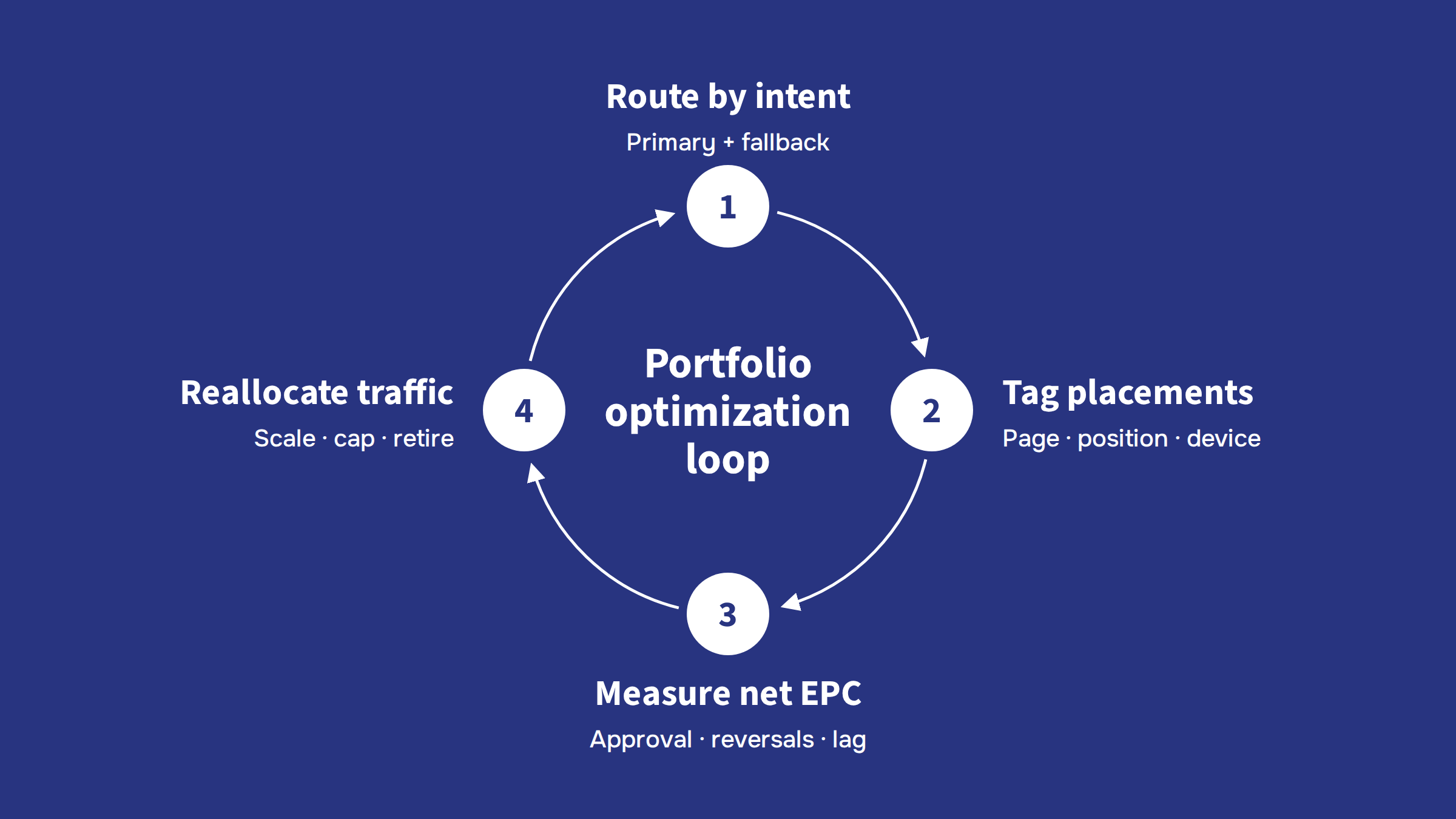
The highest advertised commission is only one part of a good financial affiliate program. Our four-part RATE framework helps publishers Route by consumer intent, Assess the payout event, Track each offer with a scorecard, and Evolve the portfolio from net results. Apply it to these 10 active U.S. programs to compare audience fit, tracking, economics, and the financial task each offer can serve.
1. Route: Match the program to the consumer's next step
A reader checking a credit score has a different goal from someone comparing loans, covering a short-term cash gap, or trying to control monthly spending. The closest match between the page, the consumer's need, and the offer usually matters more than the headline payout.
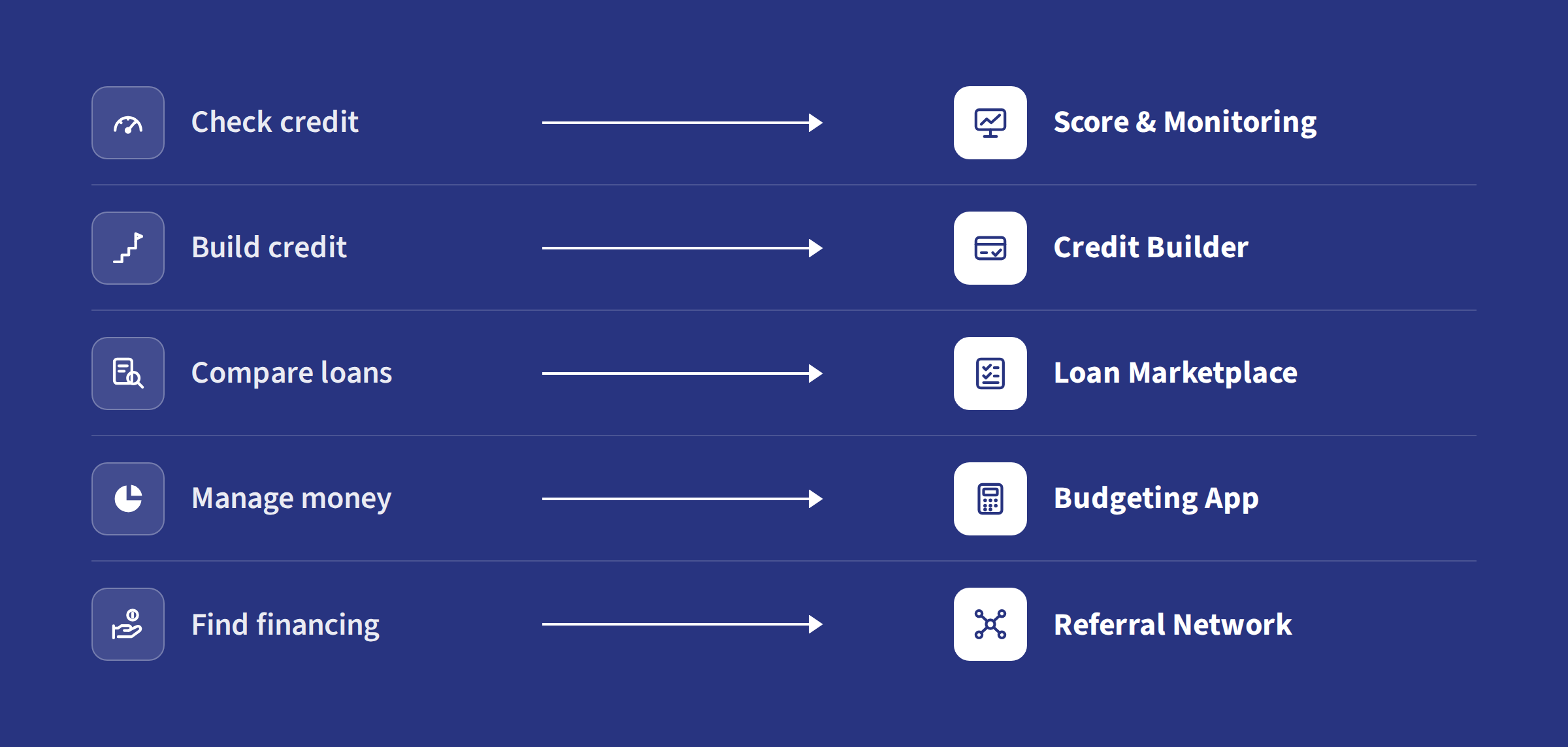
This distinction prevents a common monetization mistake: sending every visitor to the same high-paying program. Build a small offer set that covers distinct needs, then route traffic by page intent and eligibility. A credit-monitoring page, for example, needs a different primary offer and fallback from a page for consumers seeking a small personal loan.
2. Assess: Choose the payout event before the payout amount
Financial affiliate programs can pay at several points in the customer journey. The farther downstream the event, the fewer referred visitors usually reach it. A high funded-account cost-per-action (CPA) payout can therefore earn less than a smaller payment for an approved lead.
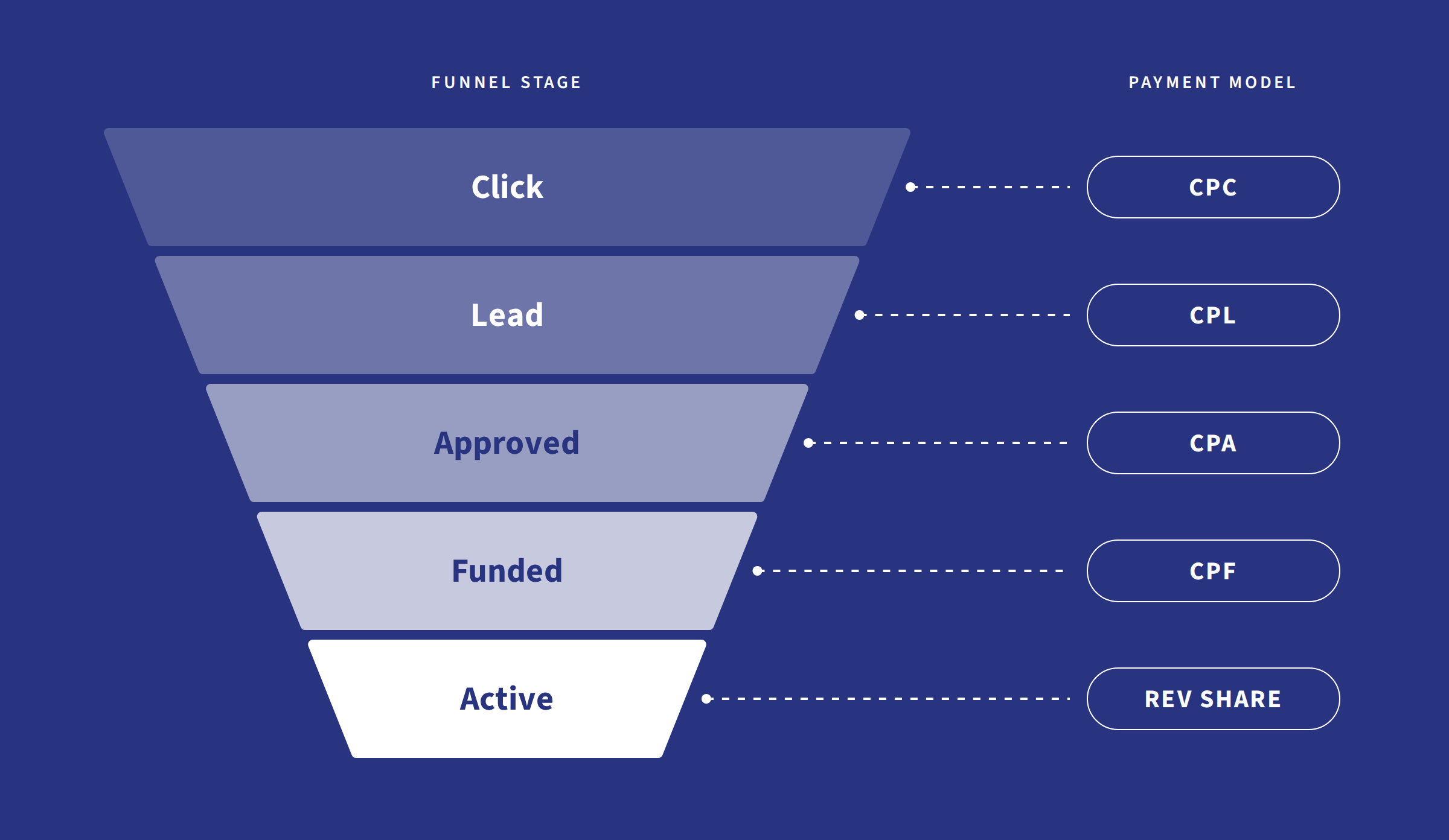
Compare offers using expected earnings per click (EPC):
EPC = commission per event × events ÷ affiliate clicks
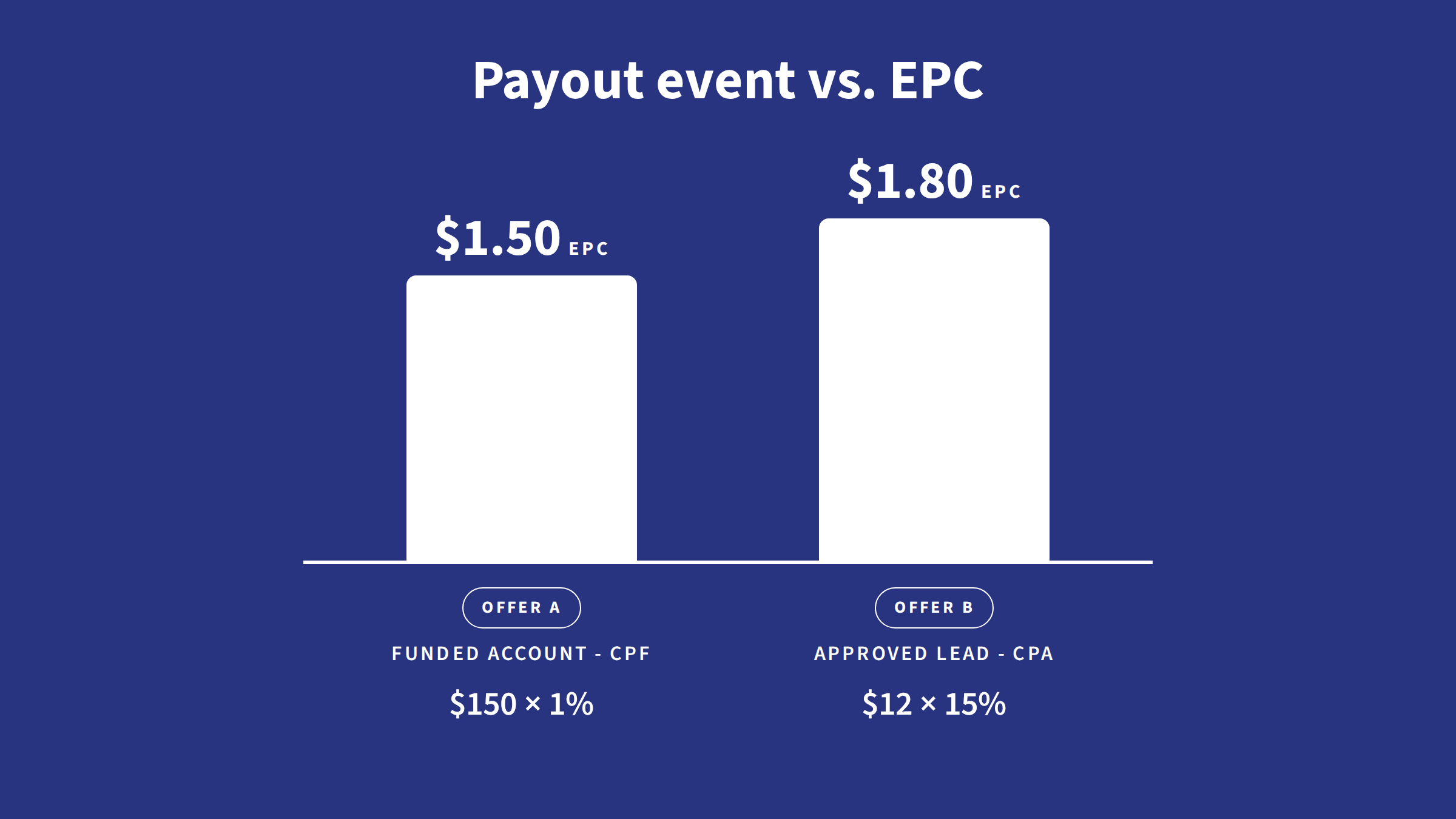
For example, a $150 funded-account payout at a 1% click-to-funded rate produces a $1.50 EPC. A $12 approved-lead payout at a 15% conversion rate produces a $1.80 EPC. The second offer pays less per event and more per click.
Run the same calculation after reversals, rejected leads, refunds, and payment holds. Then segment it by traffic source, page, product, credit band, device, and geography. A blended sitewide EPC can hide a strong offer for one audience and a weak offer for another.
3. Track: Use a five-part program scorecard
A rate card captures only one part of program quality. A useful comparison starts with net economics, then weighs audience fit, the conversion event, reporting, and the consumer outcome.
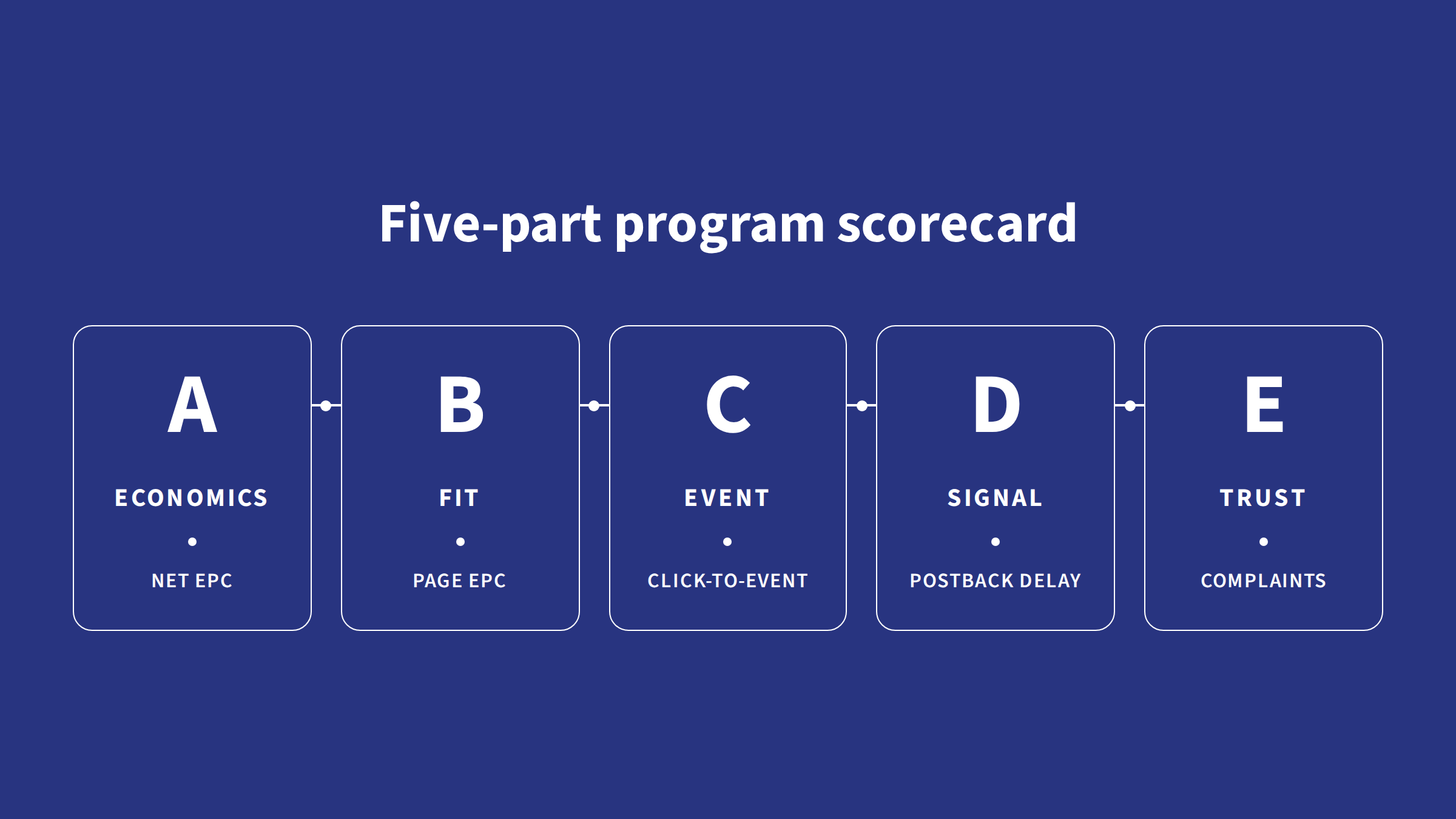
A. Economics after adjustments and EPC
Use net EPC rather than the rate card. Include rejected conversions, clawbacks, minimum payout thresholds, and the staff time needed for creative approvals. Track revenue share by cohort because it may grow or disappear with user activity.
B. Audience and product fit
Start with the financial task the visitor is already trying to complete. A reader preparing for a mortgage may need a credit-monitoring product. A consumer denied a loan may need a credit-building or alternative lending route.
C. Conversion event and approval rate
Define exactly what earns commission: click, form submission, approved application, funded account, first transaction, paid subscription, or ongoing activity. Duplicate leads, existing customers, canceled transactions, and fraud reviews can all affect eligibility.
D. Tracking and feedback speed
Record the attribution window, cross-device behavior, sub-ID support, postbacks, reporting delay, and reconciliation process. Fast event data lets you adjust placements and traffic before a poor campaign consumes a month of clicks.
E. Trust and consumer outcome
A program should provide approved claims, current creative, geographic rules, and a responsive contact. It should also solve the reader's problem on reasonable terms. A poor recommendation can damage trust across every future offer.
4. Evolve: Build a portfolio, then prune it with data
Start with one primary offer for each distinct audience need, plus a fallback for visitors who do not fit it. Give every placement a sub-ID that identifies the page, position, device, and creative. After enough traffic, compare net EPC, approval rate, time to conversion, reversal rate, and revenue per qualified visitor. Scale the placements that hold up after reconciliation, cap weak segments, and retire offers that do not earn their place.
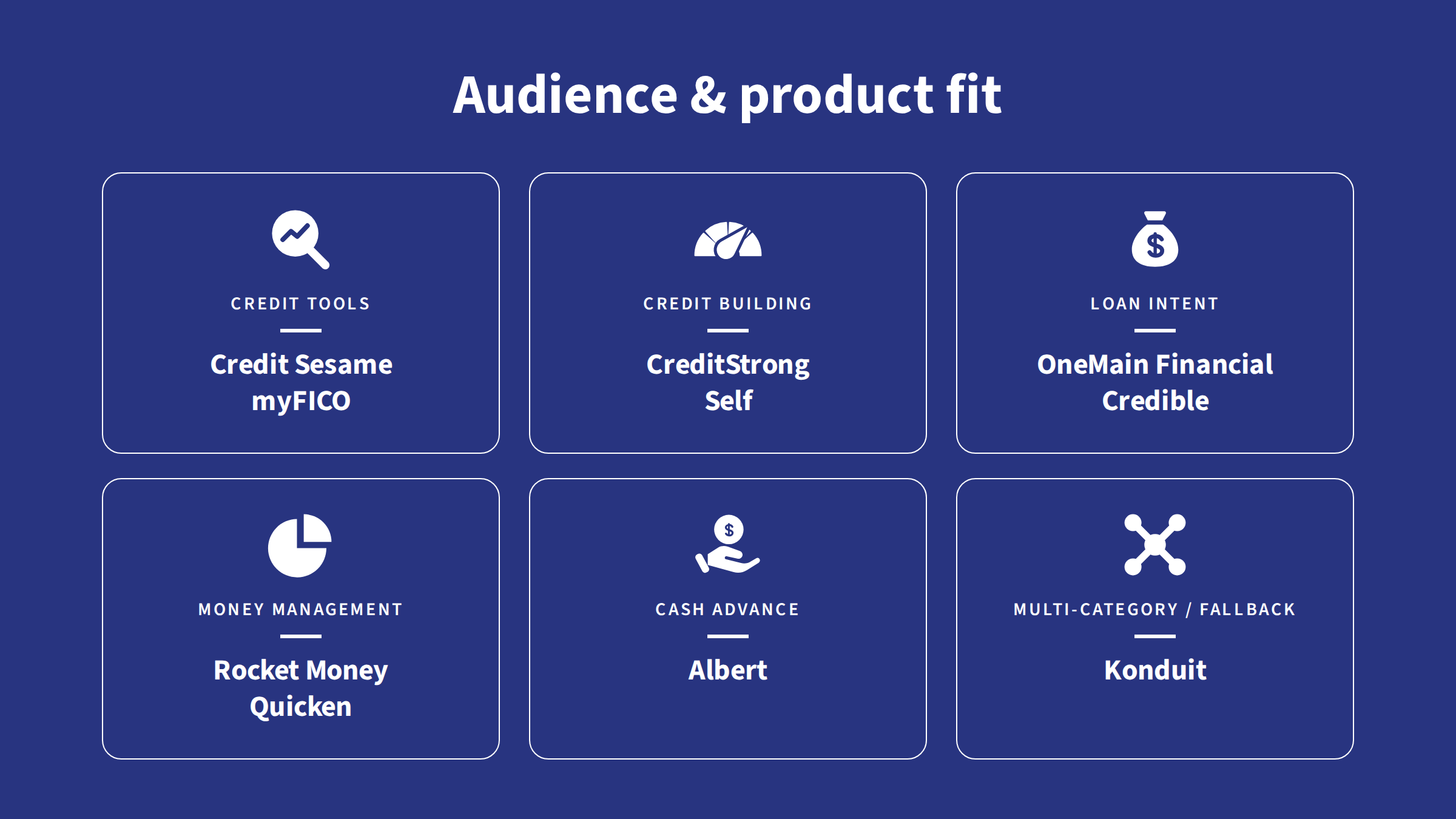
Where each financial affiliate program fits
Rocket Money and Quicken fit broad money-management needs. Albert is the more direct fit for pages about short-term cash gaps, while Credit Sesame and myFICO are focused on credit monitoring and Credible has a clear student-loan use case.
Konduit fits publishers and financial institutions serving consumers across subprime through prime credit profiles. Its product demand includes credit building, cash advance or early wage access, and personal loans, including small-dollar needs. Senders can earn referral revenue. Banks and credit unions may recognize that revenue as fee or non-interest income.
OneMain Financial and Credible can serve larger personal-loan intent. Credible's marketplace generally gives stronger-credit borrowers more lender and rate options, while OneMain also evaluates consumers with less-than-perfect credit.
10 financial affiliate programs to compare
Konduit Referral Network
Our Konduit Referral Network matches high-intent U.S. finance traffic to demand across personal loans, auto loans, credit builder, early wage access, and credit cards. Publishers can connect by click-out or application programming interface (API) and use cost per click (CPC), cost per action (CPA), or revenue-share models. Reporting is available through postbacks, pixels, or custom CSV exports, with monetization-event feedback in seconds instead of a wait for funded-event data. Approved participants can go live in days with no setup fees. Approval takes under 5 days, and the network puts traffic in front of 50+ bank and credit-union buyers.
Recommended for: Established affiliates, financial publishers, apps, and fintechs with traffic across subprime-to-prime credit profiles, several consumer-finance categories, or unserved visitors.
Watch for: Economics depend on product, filters, caps, and available demand. One publisher case study reports 300% referral-flow growth over 2 years, 92% referral monetization, and $1.3 million in added annual revenue. That is one customer's result, not a forecast.
Credit Sesame
Credit Sesame combines free credit tools with financial product discovery. Its Impact-managed program supports CPA, revenue-share, and hybrid terms.
Recommended for: Credit education, credit monitoring, and financial product discovery pages.
Watch for: The payable action varies by campaign. Measure member registration and later product activity as separate funnel events.
CreditStrong
CreditStrong pays $35 for each successful referral to its credit-building products.
Recommended for: Credit-building courses, personal finance creators, and publishers serving consumers with limited credit history.
Watch for: A score increase is not guaranteed. Explain the account's costs and payment requirements without promising a specific result.
myFICO
myFICO pays approved marketing partners for attributed leads to its FICO Score, credit-report, and monitoring products. Applications go through Rakuten Advertising.
Recommended for: Credit-score explainers, mortgage-readiness content, auto finance publishers, and financial product comparison sites.
Watch for: The commission rate is private. Distinguish FICO Scores from other score models in promotional copy.
OneMain Financial
OneMain Financial runs a CPA-based personal-loan program with tracked links, daily reporting, and an optional JSON API integration.
Recommended for: Personal-loan publishers and consumer credit sites with application-ready traffic, including consumers with less-than-perfect credit.
Watch for: A direct lender has a narrower product and underwriting path than a multi-provider marketplace. Declined or out-of-footprint traffic needs another route.
Credible
Credible is a multi-lender marketplace for student loan refinancing, private student loans, personal loans, mortgages, and credit cards.
Recommended for: Student finance publishers, college-planning sites, and loan-comparison content where readers want to review several providers.
Watch for: Product categories have different conversion paths. Separate student loans, refinancing, personal loans, mortgages, and cards in reporting.
Rocket Money
Rocket Money's Impact-hosted program tracks sales and sign-ups for its budgeting, bill-management, and subscription tools. Published commissions range from $4 to $10.
Recommended for: Budgeting sites, money-saving newsletters, and subscription-management content.
Watch for: The approved campaign defines which sale or sign-up qualifies. A smaller commission can still produce a higher EPC when the offer closely matches the reader's task.
Quicken
Quicken's Impact-hosted program pays commission when a referred visitor purchases Quicken or Quicken Simplifi.
Recommended for: Personal finance blogs, software reviewers, financial coaches, and publishers focused on budgeting, cash flow, savings, or investments.
Watch for: A paid software purchase sits later in the funnel than a free registration. Measure purchase conversion and cancellations, then compare net EPC.
Albert
Albert combines budgeting and banking features with early direct deposit and Instant Advance, which offers eligible users cash advances from $25 to $1,000 without interest or late fees. Current performance-network listings show U.S. publisher offers rather than one public direct-affiliate rate card.
Recommended for: Cash-advance, early-pay, budgeting, and short-term cash-flow content when the available campaign accepts the publisher's traffic type.
Watch for: Publisher eligibility, allowed traffic, commission, and the payable action are campaign-specific. Consumer eligibility also varies, and few users qualify for the $1,000 maximum. Keep promotional copy aligned with the campaign's approved terms and current consumer disclosures.
Self
Self's Perform[cb]-managed program promotes its Credit Builder Account and related credit-building products. It provides a 30-day cookie, updated creative, and dedicated account management.
Recommended for: Credit education, financial inclusion, first-apartment, and limited-credit-history content.
Watch for: Explain monthly payments, interest, and fees. Do not promise a particular score increase.
If your audience spans credit profiles or your current offer leaves high-intent visitors unserved, explore the Konduit Referral Network and choose the routing, tracking, and payment model that fits your flow.